Transponder, Smart Key or Remote Fob? Know What Your Car Uses
Ask most people what kind of key their car uses and you'll get a shrug. It's just 'the key' — until you need a replacement and suddenly it matters a great deal. The type of key your car uses decides how a new one is made, how long it takes, and what it costs. Knowing the difference puts you in control of the conversation.
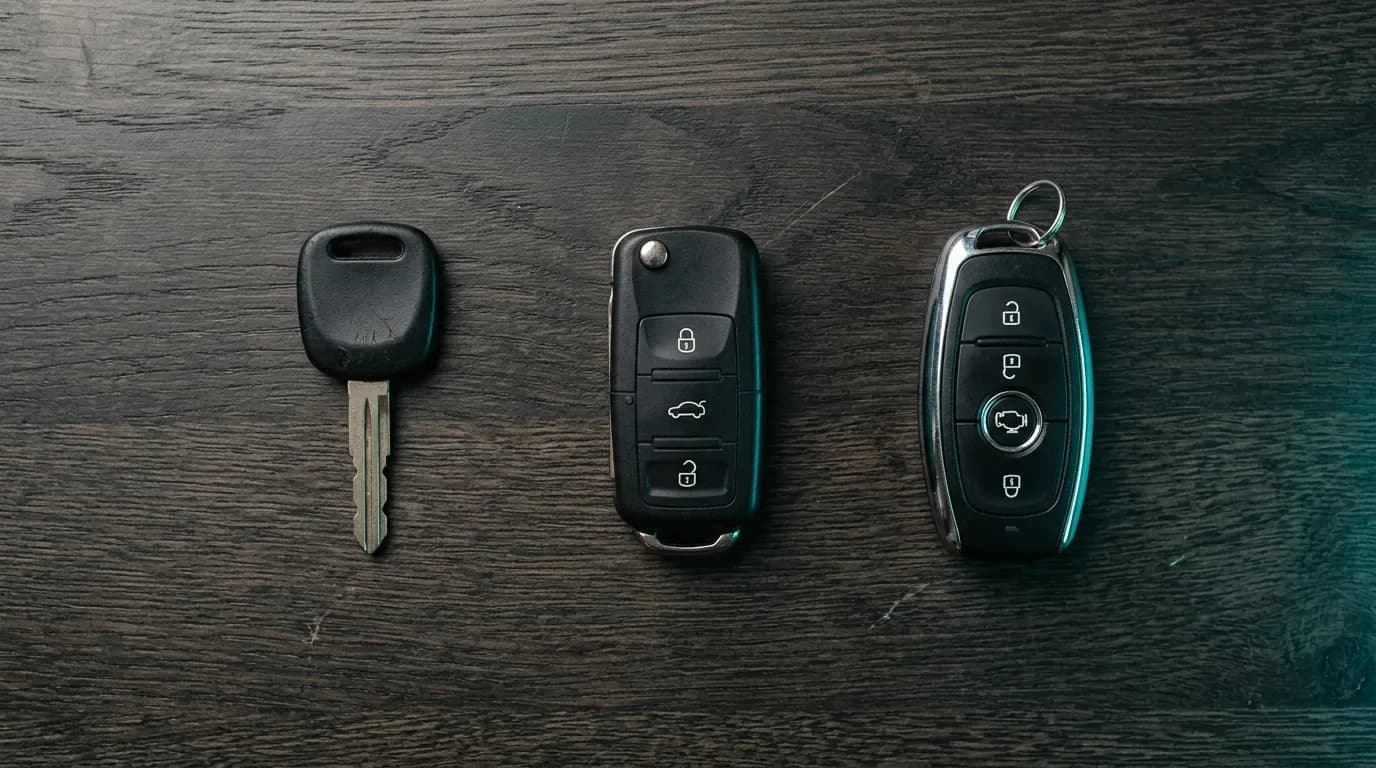
There are really three families of car key on the road today, plus one invisible piece of technology that ties them together: the immobiliser. Once you understand these, you'll know exactly what you're dealing with the next time a key goes missing or stops working.
The immobiliser: the reason it's not just a cut key anymore
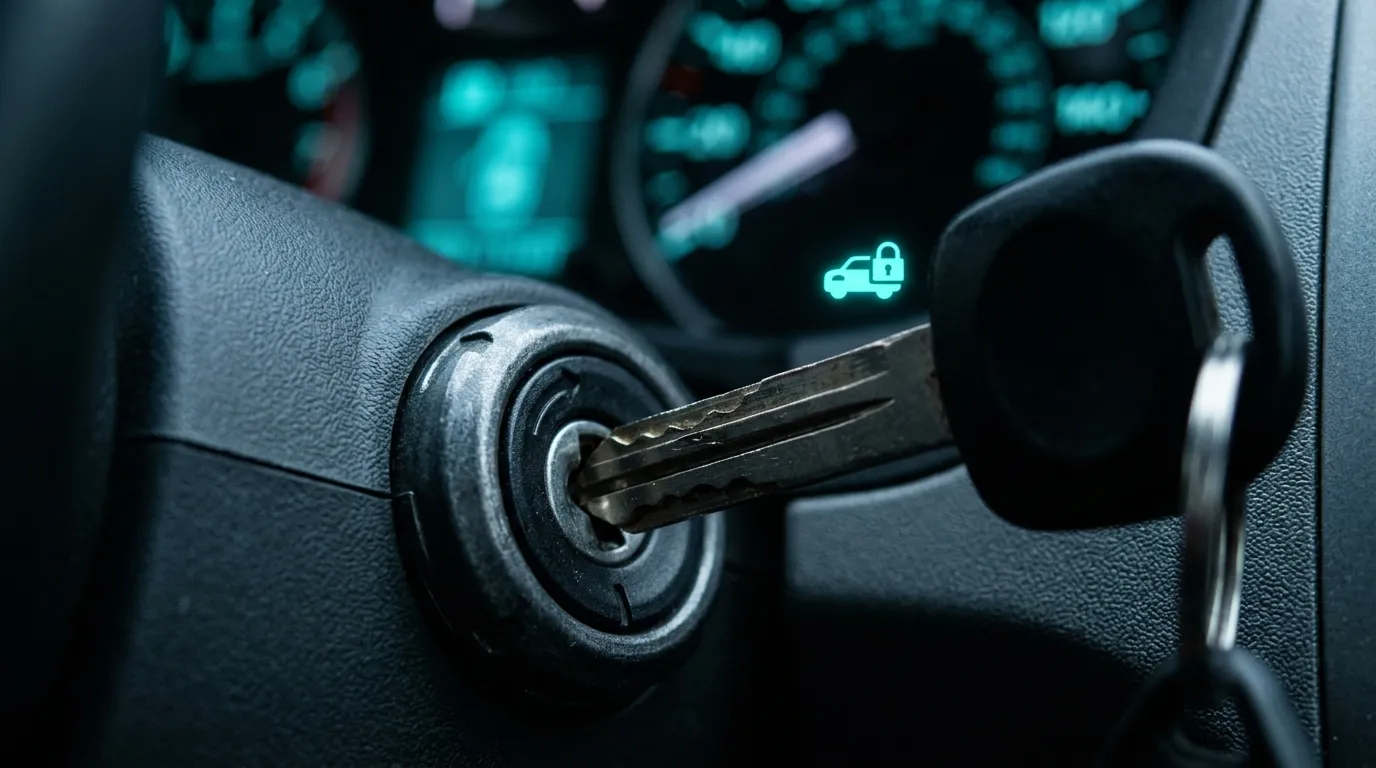
Start here, because it explains everything else. Almost every car built since the late 1990s has an immobiliser — an anti-theft system that stops the engine starting unless it receives the correct electronic code from the key. This is why you can't just grind a blank at a hardware store and drive off. The blade might turn the barrel, but without the right code the immobiliser keeps the engine dead. We explain that handshake in more depth in why a cut key won't start your car.
So on a modern car, making a key is always two jobs: cutting the metal to match the locks, and programming the electronics to satisfy the immobiliser. The three key types differ mainly in how they carry that electronic code.
Transponder keys: the chip in the plastic head
A transponder key looks like a traditional metal key, but the plastic head hides a tiny microchip. When you turn the key in the ignition, the car sends out a signal, the chip answers with its code, and the immobiliser lets the engine start. There are no buttons — you unlock the door with the blade and start the car by turning the key.
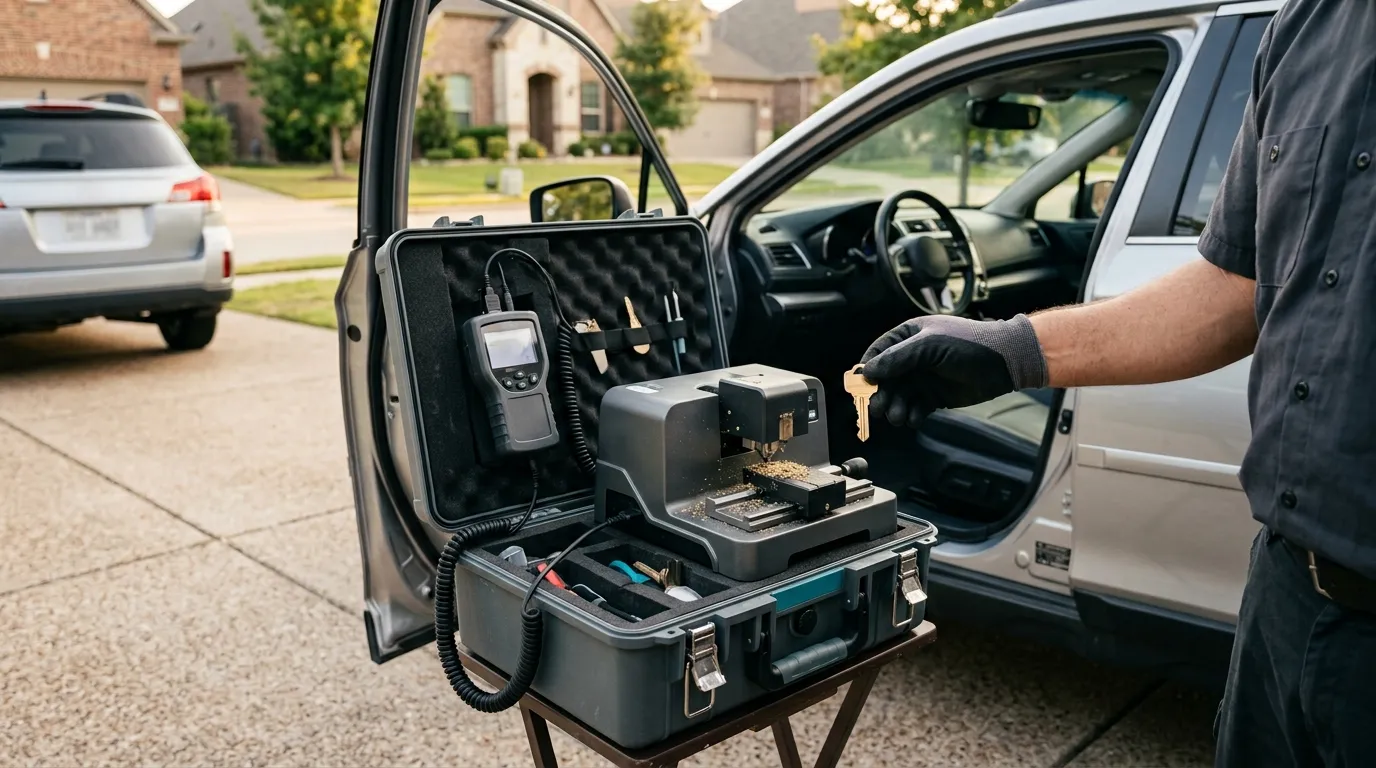
These are extremely common on cars from roughly the late 1990s through the 2010s. Replacing one means cutting the blade and programming the chip, which a mobile locksmith does on-site through our transponder chip key service.
Remote keys: a transponder with buttons
A remote key (sometimes called a remote-head key or flip key) is a transponder key with buttons added for central locking — lock, unlock, sometimes a boot release. You still insert and turn it to start the engine, but you can lock and unlock the car from a few metres away.
Because the remote controls the locks wirelessly, replacing one involves programming both the immobiliser chip and the remote functions. It's routine work, but it's a step beyond a plain transponder, which is why identifying your key correctly matters.
Smart keys: push-button start, no blade needed
A smart key (or proximity fob) is the newest family. You keep the fob in your pocket or bag, the car senses it nearby, and you start the engine with a push-button — no inserting anything. Many still hide a small emergency blade inside for the door, but day to day you never use it.
Smart keys are the most sophisticated to replace because the fob, the proximity sensing and the immobiliser all have to be programmed together. Our remote and smart key service covers these, and for most mainstream models it's still done on-site.
How to tell which one you have
You don't need to be a mechanic to work it out. Run through this quick checklist:
- Do you insert a key and turn it to start, with no buttons on the key? That's a transponder key.
- Do you insert and turn to start, but the key also has lock and unlock buttons? That's a remote key.
- Do you leave the key in your pocket and press a button on the dash to start? That's a smart key.
- Not sure? Check your car's age — plain transponders dominate older cars, smart keys the newer ones — or just tell us your make, model and year.
Getting this right before you call saves everyone time, because it tells the locksmith exactly what blank and programming gear to bring.
Why the difference matters for a replacement
Each step up in technology adds a layer of programming, which is why a smart key isn't the same job as a plain transponder. It also affects whether a job can be done fully on-site and how quickly. If you're weighing up who should make your key, our comparison of locksmith versus dealership is a useful next read.
The simplest move is to let us identify it for you. Tell Keymate your make, model and year, and we'll confirm exactly which key your car uses and give you a free quote to replace it — cut and programmed on-site, whichever of the three you've got.